Column 18 (385-398)
Esna 385
- Location: Column 18
- Date: Trajan
-
Hieroglyphic Text
- Bibliography: See entries in Tempeltexte 2.0
Anb nḥp
grg tȝ pn
nṯr n nṯr.w m spȝ.wt
Ỉrỉ-tȝ wr
ỉr nn r-ȝw
ẖnmw-Rʿ nb tȝ-sn.t
nṯr-ʿȝ ḥr-ỉb [Ỉwny.t…]
A Lord of the Potter’s Wheel,
who founded this land,553
god of gods in the nomes;
Great Irita,
who made this all in its entirety:
Khnum-Re Lord of Esna,
great god within [Iunyt…]
Bḥry-ỉdb
nṯr smȝ sbỉ.w
nb ʿnḫ
snb r-ḫt=f
sr pw wr(?)
ỉr.n=f nṯr ẖr[…]=f
ršw ḥr.w (n) mȝȝ ḥr=f
ẖnmw nb sḫ.t […]
B Chief of the field,
God who slays the rebels,
Lord of life,
who controls health:
that means the great prince (?).554
He made divine […] under his […],
faces rejoice (from) seeing his face:
Khnum Lord of the Field […]
Esna 387
- Location: Column 18
- Date: Trajan
- Hieroglyphic Text
- Bibliography: Sauneron 1962, pp. 219-222; see also Tempeltexte 2.0
1ky dwȝ ẖnmw
ḏd-mdw
ỉnḏ-ḥr=k
ẖnmw-Rʿ nb tȝ-sn.t
ḏd Pth-tȝ-ṯnn
Nwn wr ỉt nṯr.w
ḏd ḫʿỉ m ỉtn
ḏȝỉ p.t
ỉwty wrḏ.n=f
pẖr dwȝ.t
sḥḏ tȝ.wy
ḫrs kkw
m-ḫt dỉ=f sw
šȝʿ.n=f hrw
2ỉr.n=f grḥ
rwḏ ỉb=f
ḥr wbn ḥtp
ỉtn wr
psḏ m ȝḫ.t
1 Another hymn to Khnum.
Words spoken:
Greetings to you,
Khnum-Re Lord of Esna,
that is: Ptah-Tatenen;
Nun the great, father of the gods!
That is: he who appears as the sundisk,
and sails across the sky,
without tiring;
who goes around the Duat,
who illumines the two lands,
and drives away darkness,
after he has shown himself.
He invented the day,
2 and he made the night;
his heart is firm
while rising and setting:
the great sundisk,
who shines in the Akhet.
wbny ʿnḫ.tw m mȝȝ=f
dgȝ ỉr.t nb.w ỉm=f
smn nty.w-ʿ nb r-nḥḥ
qd rmṯ.w
ms nṯr.w
wtṯ psḏ.t
wtṯ ỉḫt nb
nḥp 3nṯr.w
m-ḫt ms(.t) pȝwty tpy
qmȝ wnn.t nb
ḥȝ.t ỉr nn […] ḥȝ.t=f
mȝṯ.n=f sḫr.w nb n ỉb=f
štȝ msḫʿ.w
ʿšȝ ḫpr.w
nn rḫ.tw bs=f
Shining one, whom all live from seeing,
every eye perceives through him;
he who established all eternall routines,
who builds humans,
who birthed the gods,
who begat the Ennead,
who begat everything.
He who modelled 3 the gods on the wheel,
after birthing the First Primeval one,
who created all that exists.
The first one, who made this […] his heart,
he conceived all plans through his mind.
Mysterious of births,
numerous of manifestations,
one cannot know his sacred image.
nṯr wʿ
ỉr sw m ḥḥ.w
ỉr wnn.t nb
4m r’-ʿ.wy=f
pȝwty šȝʿ ḫp(r)
ṯz spȝ.wt m sḫr.w=f
dỉ bw nb ḥr wȝ.wt
ḥr ḫdỉ ḫntỉ
ḥr mȝȝ nṯr.ty=f
Sole god
who made himself into millions,555
who made all that exists
4 through his activity.
Primeval one, who began existence,
who bound the nomes through his plans;
who puts everybody on the proper paths,
going up and downstream
beholding his two divine eyes (sun and moon).
pr m Nwn
ḫntỉ mḥy.t
m wḏ n nṯr pn šps
ỉỉ Ḥʿpỉ r-ḏr ỉb=f
mḥ.n=f tȝ.wy
m nfrw=f
ʿnḫ sʿnḫ 5ỉḫt nb
mw.w ṯȝ.w ȝm(.w) m ḫfʿ=f
dỉ.n=f ỉm n mr=f
ẖ.t nb pḫ(ȝ).tw m-bȝḥ=f
dỉ zȝ zȝ.t
n nḥỉ sw
ṯȝw n ʿnḫ (n) srq-ḥty.t
sšm=f s r fnḏ nb
He who emerged from Nun.
The north-wind blows south
through the command of this august god,
and Hapi arrives according to his mind,
having filled the two lands
with his beauty.
Living god, who enlivens 5 all things;
water and air are held in his grasp,
he gives thereof to whomever he pleases,
all bodies are prostrate before him.
He who gives a son and daughter
to whomever beseeches him;
the breath of life (for) humans,
he guids it to every nose.
wȝỉ.w m ḥr.w
tkn m sḏm ḥḥ.w
6nn rḫ.tw ỉnm=f
ỉty n nḥḥ ḏ.t
nswy.t=f mn(.w) rʿ-nb
nb sḥ
mnḫ sḫr.w
wḥʿ.n=f kȝ.t m ʿ.wy=f
wp mdw ỉr ḫrw
He who is remote from eyes,
but approaches the hearing of millions,
6 one cannot know his true appearance.
Sovereign of all eternity,
his kingship endures every day;
lord of counsel,
effective of designs,
he began work with his hands,
distinguishing speech and making sounds.
smsỉ tȝ m ỉmy=s
ṯz ỉwʿ
sḫp(r) tȝ.wy
qmȝ ḥry.w ẖry.w
nṯr mnḫ
smn.n=f 7nfy
ỉr nfy
nn pȝ wḏ=f tkk
nn r-ȝw
ntf ỉr=sn
nn nq(ȝ) kȝ.t nb
m-ḫm=f
ḥtp ḥr=k nfr
n (pr-ʿȝ ʿnḫ ḏ.t)|
He who makes the earth birth its contents,
who binds together an heir,
who produces the two lands,
and created what is above and below.
Beneficent god,
he established 7 all that;
he who makes all that,
his commanded has never been overrun.556
All this in its entirety:
it is he who made it all,
no work is even conceived
without him knowing.
May your beautiful face be kind
to (Pharaoh, Living Eternally)|!
Esna 388
- Location: Column 18
- Date: Trajan
- Hieroglyphic Text
- Bibliography: Sauneron 1962, pp. 223-225; Leitz, Löffler 2019, pp. 60-61; see also Tempeltexte 2.0
7ky dwȝ ẖnmw-Rʿ
ḏd-mdw
ỉnḏ-ḥr=k
ẖnmw-Rʿ nb tȝ-sn.t
Ptḥ qmȝ swḥ.t
pr(.t) m Nwn
qmȝ 8ḫpr(.w)
qdỉ ỉqd.w
rnn rnn.wt
ẖnmw ỉr ẖnm.w
tȝ-ṯnn ỉr nn r-ȝw
nb ḥḥ
ỉr nṯr.w
pȝwty ḫnty pȝwty.w
msỉ ms nty
ḫʿỉ nḥp
m wḏ n kȝ=f
kȝ nb kȝ.w
ḫnty ḫnt-tȝ
9Šȝy Rnn.t r-ḫt=f
ṯz ṯȝw
srwḏ swḥ.t
ỉr mw m qsw nfr
nb mṯȝ
mry=f sṯỉ
hy wtṯ nṯr.w nṯr.yt
qmȝ swḥ.t
sʿnḫ ṯȝw
dỉ ṯȝw r fnd
n gȝw-ḥty.t
7 Another hymn to Khnum-Re.
Words spoken:
Greeting,
Khnum-Re Lord of Esna!
Ptah, who created the egg
which emerged from Nun.
He who created 8 existence,
builder of builders,
nurturer of nurturers,
Khnum who made the Khnums,
Tatenen who made all of this.
Lord of millions,
who made the gods.
Primeval one, foremost of the primeval;
Birthing one, who birthed what is;
the potter’s wheel appears (in the womb)
through the command of his Ka;
Ka, lord of Kas,
foremost of Khent-ta,
9 Shai and Renenet are with him.
He who raises the embryo,
who strengthens the egg,
who makes semen into good bone;
Lord of the phallus,
his love is procreating;
Husband ram, who begat gods and goddesses,
who creates the egg,
and enlivens the embryo,
who gives air to the nose
of the ‘not-yet-breathing’ (the fetus).
qdỉ rmṯ.w nṯr.w
wnn=s(n) ʿnḫ=sn
m kȝ.t ỉr.n=f
kȝ.t=f pw ỉr ỉḫt nb.w
qmȝ kȝ.w
nbỉ ỉd.wt
sḫp(r) pr nb ḥr nḥp=f
nṯr wʿ
nbỉ=f s(w) ḏs=f
nn ỉr(.t)
mȝȝ=s ỉnm=f
šps wr m ṯpḥ.t-ḏȝ.t
11wr nn rḫ qd=f
sšm ḥʿpỉ m qr.ty=f
m rn=f wr
ỉwḥ.n=f ȝḫ.t
ʿnq=f sw r tr=f
qmȝ.n=f ỉḫt ʿšȝ
r sḏfȝ ḫȝ.wt
n nṯr.w nṯr.yt
qmȝ 12sm.w
sḫp(r) wȝḥy.t
r sʿnḫ rmṯ.w
nb wnm nfw
dỉ=f s(n)
r bw ḏr ỉb=f
dỉ=f s(n)
r snỉ-tȝ n mr=f
r ḏr sḫr.w=f
mʿr sp.w=f
ỉwty whn sp=f
ḥtp ḥr=k nfr
n (pr-ʿȝ ʿnḫ.w ḏ.t)|
He who build humans and gods,
so that they all live
through the works he made:
his duty is making all things.
He who created bulls,
and fashioned cows,
who created all that comes forth
on his potter’s wheel.
Sole god,
who fashioned himself,
without any (other) eye
that might see his skin.
Great, august one in the Blocked Cavern,
11 great one, whose form is unknown.
He who leads Hapi from his grottoes,
in his great name,
having flooded the ȝḫ.t-field,
and withdrawing himself at his time.
He created numerous goods,
to provision the altars
of gods and goddesses.
He who created 12 plants,
who produced grain,
to keep humans alive.
Lord of eating and breathing,
he gives them,
to whomever he pleases;
he gives them,
to whomever bows down to his beloved,
and according to his plans.
His occasions are successful,
without ever failing.
May your good face be kind
to (Pharaoh Living forever)|!
Esna 389
- Location: Column 18
- Date: Trajan
- Hieroglyphic Text
- Bibliography: Sauneron 1962, pp. 225-226; see Tempeltexte 2.0
12ky dwȝ ẖnmw
ḏd-mdw
13ỉnḏ-hr=k
ẖnmw-Rʿ nb tȝ-sn.t
Ptḥ tȝ-ṯnn
ḫnty ʿ-rsy
qmȝ ḥmw.wt
ḥr-ỉb ṯp[ḥ].t-ḏȝ.t
ỉt-ỉt.w
nṯr ʿȝ m ḥw.t-ỉt
Šw rsy-ỉnb=f
ḫnty Ỉwny.t
ḏfn mnḫ
nb nṯr.w rmṯ.w
šȝʿ šȝy
14nb msḫn.t
kȝ pw ḥry kȝ.w
wtṯ nṯr.w
qd ʿw.t nb
qmȝ pȝy.w
sḫp(r) ḫnn.w
ỉr.n=f ḥrr.w nb
12 Another hymn to Khnum.
Words spoken:
13 Greetings,
Khnum-Re Lord of Esna!
Ptah-Tatenen,
foremost of the Southern District,
he who created the artisans
within the Blocked Gro[tt]o,
Father of Fathers,
great god in the Temple of the Father.
Shu, South of his Wall,
foremost of Iunyt,
beneficent ancestor,
Lord of gods and people;
who began Shai,
14 lord of the birth-brick.
He is the Ka, foremost of Kas,
who begat the gods,
who built all livestock,
who created birds,
who produced fish,
and he made all snakes.
qmȝ nty
ỉr wnn.t nb
wtṯ ỉḫt nb
qmȝ ȝ.t=f
qmȝ ỉḫt nb
ḫp(r) kȝ.t nb
m r’-ʿ.wy=f
15m rn=f pfy
n Km-ȝ.t=f
He who created what is,
who made all that exists,
and begat all things.
He who created his moment (qmȝ-ȝ.t=f),
and created all things,
so that all works come about
through his actions,
15 in this his name
of Kematef (Km-ȝ.t=f).557
ptḥ.n=f sw m ḫprw=f štȝ
m rn=f n Ptḥ
ṯnỉ=f r nṯr.w nṯry.t
m rn=f pfy n tȝ-ṯnn
bȝ n R m zp-tpy
shḏ.n=f tȝ.wy
wn(.w) m snk
ẖnmw nṯr.w nṯry.t
16m st.wt=f
(m rn=f) pfy n
ẖnmw
He opened (ptḥ) himself
in his mysterious image558
in his name of Ptah (Ptḥ).
He distinguished (ṯnỉ) himself
over the gods and goddesses,
in this his name of Tatenen (tȝ-ṯnn).
Ba of Re in the initial moment,
he illumined the two lands
which were in darkness;
he who endows (ẖnm) gods and goddesses
16 with his rays,
(in) this (his name) of
Khnum (ẖnmw).559
ỉmn=f sw r nṯr.w
m rn=f pfy n Ỉmn-wr
šȝʿ.n=f ṯȝw
nn rḫ.tw=f
m rn=f pfy n Šw
ḥsb ʿḥʿ
nb rnp.wt
m rn=f pfy n Ḏhwty
He hid (ỉmn) himself from the gods,
in this his name of great Amun (Ỉmn).
He began (šȝʿ) the air
without being known
in this his name of Shu (Šw).
He who calculates lifetimes,
lord of years,
in this his name of Thoth.
mȝȝ r pȝ wḫȝ mḥty
m sḫr.w=f
(Now look to the column to the north
in its position).
The hymn continues in Esna 332.
Esna 390
- Location: Column 18
- Date: Trajan
- Hieroglyphic Text
- Bibliography: Sauneron 1962, pp. 200-201; see Tempeltexte 2.0
NB: This hymn continues from Esna 303.
17ḥmww nfr
msỉ ʿḫm.w
ỉqr ḏbʿ.w
qdỉ ḥnmm.t
ỉmȝ-ỉb
ẖnm ỉḫt nb
ḥr nḥp=f
ʿȝ sʿšȝ
ʿš n=f
sḫm ʿnḫ
ỉr ỉrw=f r-nḥḥ
tm šwỉ tȝ m pr.t=f
mn kȝ.t=f mỉ Rʿ
m rʿ-nb
h(y) n=k
18nḥpy rn=k
ḥtp-ḥr=k nfr
n (pr-ʿȝ ʿnḫ ḏ.t)|
sʿšȝ=k ḏȝm.w=f n ḏ.t
17 The good artisan,
who fashions the divine images;
excellent of figures,
who models the sunfolk;
pleasant of mind,
who unites everything
upon his potter’s wheel;
great one (ʿȝ), who magnifies (sʿšȝ)
whomever calls (ʿš) out to him.
Living image,
who continues his form forever,
the land is never devoid of his seed,
his work endures like Re
daily.
Praise unto you,
18 ‘Potter’ is your name!
May your face be kind
to (Pharaoh living eternally)|
and magnify his generations forever.
Esna 391
- Location: Column 18
- Date: Trajan
-
Hieroglyphic Text
- Bibliography: Sauneron 1962, pp. 201-202; Leitz, Löffler 2019, p. 4, §1f; see also Tempeltexte 2.0
18ky dwȝ ẖnmw
ḏd-mdw
ỉnḏ-ḥr=k ẖnmw
nṯr nṯr.t ḥnʿ=f
zḫn nfr n Tfn.t
nb zḫn mry ẖnmw
wr ḥzw.t bnr mrw.t
kȝ m ẖnw
19ḥry ḥmw.wt
bȝ ʿnḫ ỉr nḏmnḏm
nb mtw.t sṯỉ nṯr.w rmṯ.w
hy n=k
ḏfn n tȝ rn=k
ḥtp ḥr=k nfr n zȝ-Rʿ
(pr-ʿȝ ʿnḫ ḏ.t)|
mr=k
dỉ=k wr ms.w=f
m-bȝḥ=k rʿ-nb
18 Another hymn of Khnum.
Words spoken:
Greeting to you, Khnum!
The God, with whom is the Goddess;
the good companion of Tefnut,
Lord of embraces, who loves unions,
great of praise, sweet of love.560
Bull within the palace,561
19 he who mounts the women,
living Ba, who makes sexual pleasure,
lord of semen, who begets gods and humans.
Hail to you!
‘Ancestor of the Earth’562 is your name.
May your good face be kind to the Son of Re,
(Pharaoh living eternally)|
whom you love.
May you cause his children to be great
in your presence, daily.
Esna 392
- Location: Column 18
- Date: Trajan
-
Hieroglyphic Text
- Bibliography: Sauneron 1962, pp. 203; see also Tempeltexte 2.0
- Parallels: Multiple phrases occur in Esna 375, A.
19ky dwȝ ẖnmw
ḏd-mdw
ỉȝw n=k
pȝ bȝ šfy.t-ḥȝ.t
kȝ nḫt spd 20ḥn.ty
wr dndn
mḥr ȝ.t=f
r Sḫm.t m sḫm=s
nwd šn.w r mnw(.t)=sn
m wsr=f
ʿȝ šfy.t
wšr snf m ḥʿw
n pḥ sw
ʿȝ bȝw
21sk rn
n thỉ sw nb tp tȝ
nb ṯȝw
ʿnḫ mwt ẖr s.t-rȝ=f
hȝy n=k
ỉỉ.tw m ḥtp
(ḥtp) ḥr=k nfr
n (pr-ʿȝ ʿnḫ ḏ.t)|
19 Another hymn of Khnum.563
Words spoken:
Praise be unto you,
o Ba, prestigious of face,
mighty bull, sharp 20 of horns,
great of rage,
whose moment of anger is more painful
than Sakhmet in her power!
Trees quake564 down to their roots
through his power.
Great of prestige,
the blood freezes in the body
of whomever reaches him;
great of power,565
21 who destroyes the name
of whom ever crosses him on earth;
lord of air,
life and death are under his control.
Jubilation be unto you!
Come in peace!
May your good face be kind
to (Pharaoh living eternally)|
Esna 393
- Location: Column 18
- Date: Trajan
-
Hieroglyphic Text
- Bibliography: Sauneron 1959, p. 48; Sauneron 1962, pp. 204; see also Tempeltexte 2.0
21ky dwȝ ẖnmw
ḏd-mdw
ỉnḏ-ḥr=k ẖnmw-Rʿ nb tȝ-sn.t
ṯnỉ.n=f sw r nṯr.w
22ẖnmw tȝ-ṯnn
ḫnty ḥmw.w
ỉt-ỉt.w
ʿpr zȝṯ m zȝ.ty=fy
Šȝỉ rnn.t
nb kȝ.w
ʿḫỉ p.t m ʿ.wy=f
sḫm ḏsr
ḥr-ỉb ṯpḥ.t-ḏȝ.t
23qȝ šw.ty
spd ḥn.ty
Ỉmn wr ḫpr ḥȝ.t
qmȝ p.t tȝ dwȝ.t
hy n=k
ỉr wnn.t rn=k
ḥtp ḥr=k nfr
n (pr-ʿȝ ʿnḫ ḏ.t)|
dỉ=k wn=f ḫʿỉ.tw
ḥr s.t-Ḥr
ḫnty kȝ.w ʿnḫ.w nb.w
mỉ Rʿ ḏ.t
21 Another hymn of Khnum.
Words spoken:
Greeting to you, Khnum-Re Lord of Esna!
He distinguished himself over the gods.
22 Khnum-Tatenen,
foremost of craftsmen,
father of fathers,
who equipped the earth with his two children:
Shai and Renenet.
Lord of Kas,
who lifts up heaven with his arms.
Sacred image566
within the Blocked Cavern;567
23 tall of double plumes,
sharp of horns,
Amun the great, who came about before,
who created heaven, earth, and the Duat.
Praise unto you,
‘He who made what exists’ is your name.
May your good face be kind
to (Pharaoh living eternally)|
May you cause him to appear in glory
upon the throne of Horus,
foremost of all the living Kas,
like Re, eternally.
Esna 394
- Location: Column 18
- Date: Trajan
-
Hieroglyphic Text
- Bibliography: Sauneron 1962, pp. 205-207; see also Tempeltexte 2.0
23ky dwȝ ẖnmw
ḏd-mdw
ỉnḏ-ḥr=k
24ẖnmw-Rʿ nb tȝ-sn.t
Ptḥ tȝ-ṯnn
msỉ pȝwty.w
nṯr ʿȝ
ḫp(r) n ḏr-ʿ
bȝ ḏsr m zp tpy
ʿḫ.n=f p.t
wṯz.n=f ḥr.t
wbn=f ỉm=s m šww
dỉ=f (??) sbȝ.w ỉmỉ.tw=sn
pḏ.n=f tȝ
ḥr ndb.t=f
sḥḏ.n=f tȝ.wy
m nṯr.ty=f
ỉr nṯr nb
25šȝʿ ḫp(r)
ỉṯ.n=f tȝ.wy m nḫt=f
šfy.t-ḥȝ.wt
ṯny ỉrw
nb fȝw
sḫm ḫprw
ḫp(r) ḫprw nb.w
n ḫprw=f
23 Another hymn of Khnum.
Words spoken:
Greetings,
24 Khnum-Re lord of Esna!
Ptah-Tatenen,
who birthed the primeval ones.
Great god,
who came about long ago;
sacred Ba in the first moment.
As he raised up the sky,
so did he lift up the firmament,
so he might shine within it as the sun,
allowing the stars to (??) between them.
As he spread out the land
on its foundation,
so he illumined the two lands
with his divine eyes.
He who made every god,568
25 who began existence,
he seized the two lands with his might.
Prestigious of faces,
distinguished of visible form,
lord of respect,
powerful of manifestation.
All existence came about
through his existence.
wr wr.w
ʿȝ ʿȝ.w
wr sw r nṯr.w nb
štȝ ḫpr.w
ṯnỉ.n=f sw
26r nṯr.w
nbỉ nbỉ.w
smsw pȝwty
ỉt ỉt.w
mw.t mw.wt
ỉr ḥry.w
sḫp(r) ẖry.w
bȝ šps ỉr bȝ.w
ẖnmw ỉr ẖnm.w
qn ḏr.ty
ḫm wrḏ
nn kȝ.t nb
m ḫm=f
ỉr 27nỉw.wt
wp spȝ.wt
qmȝ tȝ.wy
smn ḏw.w
Biggest of the big,
greatest of the great,
he is greatest of all gods!
Mysterious of form,
he distinguished himself
26 beyond the gods.
Fashioner of fashioners,
eldest primeval one,
father of fathers,
mother of mothers,
who made what is above,
and created what is below.
August Ba, who made the Bas;
Khnum, who made the Khnums.
Strong of hands,
never tiring,
there is no work (made)
in his ignorance.
He who made 27 cities,
who divides the nomes;
who created the flat lands,
who established mountains.
qd.n=f rmṯ.w
ms.n=f nṯr.w
r mḥ tȝ
šnw n ỉtn
Nwn wr
ỉỉ r tr=f
r sʿnḫ pr nb
ḥr nḥp=f
ỉr sm.w
r ṯz mnmn.t
ḫ.t-n-ʿnḫ n ʿnḫ.w
ỉỉ m nw
nn 28sk ỉr.n=f
ḏr p.t r-mn mỉn
nṯr mnḫ n ḏr-ʿ
ḏȝỉ p.t tp dwȝw
mḥ tȝ m nfr=w
Šȝy Rnn.t m wḏ=f
mw ṯȝw m wḏ.n=f
nn wzf pr nb
m r’=f
nfy ḥr nn
ntf ỉr=sn
nn pr kȝ.t=sn
m-ḫm=f
ḥtp ḥr=k nfr
(n) (pr-ʿȝ ʿnḫ.w ḏ.t)|
As he built people,
so he birthed the gods,
to fill the earth,
and the circuit of the sundisk.
Great Nun,
who arrives in his season,
to enliven all who came forth
from his potter’s wheel.
He who made plants,
in order to raise livestock;
and ‘wood-of-life’ for the living.
He who arrives at the proper time,
what he made 28 never perishes,
since (the time of) heaven until today.
Beneficent god of the beginning,
who sails across heaven each morning,
and fills the earth with his goodness.
Shay and Renenet are at his command,
water and air through what he ordained;
nothing spoils which comes forth
from his mouth.
This and that:
it is he who made them,
none of their works came forth
without him knowing.
May your good face be kind
(to) (Pharaoh living eternally)|!
Esna 395
- Location: Column 18
- Date: Trajan
-
Hieroglyphic Text
- Photograph: Sauneron 1959, Pl. IX.
- Bibliography: Leitz, Löffler 2019, pp. 105-110; see also Tempeltexte 2.0
NB: This scene is extremely difficult, not only because of the unusual spellings, but also the poor quality of carving: as noted by Sauneron 1968, p. 378, n. a; Leitz, Löffler 2019, pp. 107-108, n. a.
Title and Formula
1[ḥnk] nḥp
n nb=f
ḏd-mdw
mn n=k nḥp wr ʿȝ
mry=k(?)
grg.n=k tȝ pn
m kȝ.t=f
nbỉ.n=k msw nb
ḥr tp=f
m nṯr(.w) 30
ỉmȝ[.n]=f kȝ.t 2nb
n ẖnmw.w wr.w
sšm(.w) zȝ=k m r’-ʿ.wy=sn
rdỉ.n=k s[m].w(?)
n Ḏȝỉs.w
r spnʿ ʿḥʿ.w
n th wȝ.t[-nṯr]
(m) wḏ-mnỉ
zbỉ ḥr wȝ.t-nṯr
rwḏ.tw m ʿnḏ wḏȝ
(nn) pnʿ=sn
3(m) wḏ-mnỉ
ḏȝỉ=sn rʿ-nb
wḏ=sn m rȝ-nb
mỉ šȝỉ=k
dỉ.n=k ḥry.t n Ḫmnw
r wḏʿ-mdw
nṯr.w rmṯ.w
rdỉ.n=(k) pȝ ḏbȝ
n ḏbȝ.w
(r) rdỉ.t zȝ wr n ỉt(?)
r swr k(y).w
ḥfnw ḏbʿ.w
1 [Offering] the potter’s wheel
to its lord.
Words spoken:
Take the very great potter’s wheel,
which you(?) love;
it was through its work
that you populated this land.
You fashioned every child
upon it,
by means of the 30 gods.569
You render perfect every 2 work
of the Great Khnums,
who fashion your son with their activity.
You gave plants
to the Djaisu,570
to scuttle the boats
of whomever violates the path of [god],
in all perpetuity.571
Whomever travels on the path of god,
thrives in safety and health,
they (do not?) capsize,
3 for all perpetuity.
They sail, every day,
they disembark, every day,
just as you had fated.572
You have given authority(?) to the Ogdoad,
to decide the cases
of gods and hymans.
You have given a reward (ḏbȝ)
to the Djebau (Ḏbȝ.w),
to give an elder son to (each) father,
to magnify the others,
for myriads of thousands.
The King
4nsw.t-bỉty
nb tȝ.wy
(ȝwtkrtrs kysrs)|
5zȝ Rʿ
nb ḫʿ.w
(dryns nty-ḫwỉ)|
6ḥry-tȝ Km-ȝ.t=f
ḫnty nḥp
n ẖnmw ỉr ẖnm[.w]
7nṯr nfr
sṯỉ.n kȝ nḏmnḏm
qdỉ.n ḫnty Pr-ʿnḫ
m ȝ.t ȝb ỉb=f
sṯnỉ.tw=f m ẖ.t
ḫnty ʿnḫ.w
[r] ỉr.t nsw.t
n šnw n ỉtn
ỉwʿʿ Nḥp
(trʿns [nty-ḫwỉ])|
4 The King of Upper and Lower Egypt,
Lord of the Two Lands,
(Autokrator Caesar)|
5 Son of Re,
Lord of Appearances,
(Trajan Augustus)|
6 Successor of Kematef (Km-ȝ.t=f),
foremost of the potter’s wheel,
of Khnum who made the Khnum[s].
7 The good god,
engendered by the Bull of sexual pleasure,
fashioned by Foremost of the House of Life,
in the moment (ȝ.t) his heart desired,
who was distinguished in the womb
before (all) mortals,
to serve as King573
of the circuit of the solar disk.
Heir of the Potter,
(Trajan [Augustus])|
Khnum-Re Lord of Esna
8ḏd-mdw n ẖnmw-Rʿ nb tȝ-sn.t
nsw.t nṯr.w
nṯr ʿȝ ḫnty ḥw.t-ỉt
Ptḥ-9-ṯnn m ỉȝw
ỉmȝḫw=f m Nwn
qmȝ.n=f nb.t
10m ỉȝw n ḥr=f
ḫntš ỉb=f
r mȝȝ=st
ỉỉ.n ỉb=f
r smȝwy 11msw=f
r tm wš
m kȝ.t ỉr.n=f
ḏr ỉr.n=f […]
12m ʿrqy […]
nn mȝȝ mỉt.t=f
kȝ.n=f tȝ
ḫr ẖnmw.w wr.w
r ỉr(.t) kȝ.t
13dỉ=ỉ wr ḏȝm.w=k
m ḫt-mn
[mn=k ḥr?] ns.t=k
(r)-ȝw nḥḥ
8 Words spoken by Khnum-Re Lord of Esna,
King of the gods,
Great god, foremost of Temple of the Father,
Ptah-9-Tatenen as an old man,
whose mummified form is in Nun.
All those he created
are in adoration to his face;
his heart delights
from seeing them.
His heart arrived
to renew 11 his creations,
lest there be anything lacking
in the work he performed,
since he made […]
12 on the last day of […]
its like has never been seen.
He planned the earth
before the Great Khnums,
in order to perform the work (of creation).574
13 I cause your generations to be great
throughout the world,
[and you endure upon?] your throne
for the extent of eternity.
Menhyt
NB: As noted by Leitz, Löffler 2019, pp. 109-119, n. n, the difficult epithets of Menhyt have a direct parallel in titles of Mut at North Karnak: Urk VIII, 18c (temple of Montu). Parallel epithets for Mut also occur in a still-unpublished scene from the Khonsu Temple in Karnak (reign of Augustus), which can be seen here. See already Klotz 2012a, p. 171.
14ḏd-mdw n Mnḥy.t wr.t
nb(.t) ḫnt-tȝ
wbn(.t) m Nwn
15pr(.t) ḥnʿ ḏ
m-ḥȝ.t nbỉ.tw=s
m hȝy.t n(.t) wbn
ḏsr 16ȝḫ.t ḫnt=s
ʿ(ȝ)ʿ ḏ.t=s
m (ỉ)ʿrr.t
17nsw.t-nṯr.w m ḥȝ.t=s
zȝ=s pȝwty-tpy dmḏ(.w) ḥnʿ(=s)
nn mȝȝ nḥp.n[=f]
18dỉ=ỉ šzp=k nfrw
ḫr ỉmy-nḥp=f
ỉr=ỉ s.t=ỉ
ỉmỉ.tw wp(.t=k)
14 Words spoken by Menhyt the great,
Lady of Khent-ta,
she who arose from Nun,
15 and came forth with the ḏ-serpent,575
on the brow of her fashioner;
(existing) as a firmament for rising,
he whose Akhet 16 is saced is in her;
she whose body was ejaculated (ʿȝʿ)
as a uraeus ((ỉ)ʿrr.t).
17 The King of the gods is before her,
her son, the First Primeval,
is united with (her):
one cannot see what [he?] built on the wheel.
18 I cause you to receive good things
from He who is at his potter’s wheel;
and I make my seat
upon (your) forehead.
Behind the Divinities
19[…]
ḏsr ḫprw
ḫpr zp tpy
ỉt-ỉt.w
mw.t mw.wt […
ṯz […] nṯr.w
ḫpr Ỉwny.t
kȝ.n=f tmȝ.t
ʿnḫ(?)=f ḥnʿ […]
[…] ỉrw=s m-ḫt ỉry
ʿnḫ nṯr ḥr-sȝ nṯr
ms m ḥȝ.t
ḫr.tw r=f
wtṯ.n=f nṯr.w rmṯ.w
r-gs=f
wḥm.n=f ỉrw=f
m zmȝ ḏsr […]
19 […]
sacred of manifestation,
who came about in the first moment;
father of fathers,
mother of mothers […]
who bound together […] of the gods,
so came about Iunyt.
He planned the primeval mother,
and he came to life(?) with [her?]
[…] her form afterwards:
thus a god lives after a god.
He who was born in the beginning,
(so he is called);
he begat gods and humans
beside him.
He repeated his form
as a statue, sacred of […]
Esna 396
- Location: Column 18
- Date: Trajan
-
Hieroglyphic Text
- Bibliography: see Tempeltexte 2.0
Title
1wn p.t zn tȝ
sqr ỉtr.ty
pr nṯr ỉỉ ỉt
ṯȝỉ=ỉ ʿwn(.t)=k
m-ʿ ʿ.wy=k
tks tȝ m ṯb.ty=ỉ
r s[…]
2n bȝ wr [šfy.t]
ḫsf(=i) sbỉ n pr pn
dỉdỉ(=ỉ) ḫfty
tktk=ỉ ḏw-qd
sbỉ zḥzḥ(.w) m rd.wy=ỉ
r sḫr ḫfty.w
nw 3[…]
[…]
ȝm.n=k ỉỉ.t
ds.n=k tp=sn
m ds=k
snwḫ ḥḏ=sn
sn.t=k Sḫm.t
ỉw=k m ṯȝw m-ḫt=s
r ḫdỉ […]
1 The sky opens, the earth opens,
the double chapels are unlocked,
the god comes forth, the father arrives!
I seize your ʿwn.t-staff576
from your arms,577
I puncture the earth with my sandals,
in order to […]
2 for the Ba, great of [prestige].
I repel the rebel of this domain,
I demolish the enemy,
I attack the one Evil of Character,
the rebel is trampled by my feet,
I strike down the enemies
of 3 […]
[…]
You have seized the ỉỉ.t-knife,
and you chop of their heads
with your knife.
Your sister, Sakhmet,
burns578 their bones.
You are as the wind after her,
in order to […]
The King
4nsw.t-bỉty
nb tȝ.wy
(ȝwtkrtrs kỉsỉrs)|
5zȝ Rʿ
nb ḫʿ.w
(dryns nty-ḫwỉ)|
6snn ʿnḫ
n ḥry-ỉb Ḫmnw
[ṯȝỉ] ʿwn.t(?)
n nb sḫ.t
7nṯr nfr
ty.t n nb sḫ.t
šzp-ʿnḫ n ḥqȝ mnỉ.w
ỉwʿ n ḥwỉ bṯn.w[=f]
zȝ smsw n hd ʿȝpp
qn sȝwy nḫt pw
sḫm […]
[…]
nb qn
(trʿnys nty-[ḫwỉ])|
4 The King of Upper and Lower Egypt,
Lord of the Two Lands,
(Autokrator Caesar)|
5 Son of Re,
Lord of Appearances,
(Trajan Augustus)|
6 Living image
of he who is within Hermopolis,
[who seizes(?)] the ʿwn.t-staff(?)
of the Lord of the Field.
7 The good god,
replica of the Lord of the Field,
living image of the Ruler of herdsmen,
heir of he who slays [his] rebels,
eldest son of he who attacks Apophis.
That means the mighty one, who has strength,
who has power [over …]
[…]
Lord of might,
(Trajan Augus[tus])|
Khnum-Re Lord of the Field
8ḏd-mdw n ẖnmw-Rʿ nb sḫ.t
nb tȝ-sn.t(?)
Šw ṯmȝ-ʿ
nbnb Rʿ […]
8 Words spoken by Khnum-Re Lord of the Field,
Lord of Esna(?)579,
Shu, valient of arm,
who protects Re […]
Nebtu
9ḏd-mdw n Nb.t-ww nb tȝ-sn.t
ỉr.t-Rʿ
wbd(.t) sbỉ.w m hh10=s
mḥ-ỉb n nb sḫ.t
m hrw dmḏ
m ỉỉ=f m nb pḥty
mḥn11=s ḥr tp=f
ȝm.n=s mnḥ
mnḥ tp(.w) sbỉ.w=s
m rn=s [n] Mnḥy.t
12wsr ʿ.wy=k
r sḫr ḫfty.w=k
zȝw ḥȝ=k
m hrw sk
9 Words spoken by Nebtu Lady of Esna,
Eye of Re,
who burns the rebels with her fiery 10 breath,
trusted companion of the Lord of the Field
on the day of battle,
when he arrives as the lord of strength.
She 11 coils (mḥn) upon his head,
having seizes the knife (mnḥ),
to chop off (mnḥ) the heads of her rebels,
in her name [of] Menhyt (Mnḥy.t).
12 May your arms be strong
in order to fell your enemies.
Protection surrounds you
on the day of attack.
Behind the Divinities
13nsw.t bỉty
bȝ [tkk?]
[…]
[ḥbs]=f ḥr=f
m ẖkrw=f
r tm ȝms[-ỉb]
[n] ḫfty p[n]
[snỉ]=f sḫr.w=f n swḥ
pr=f r ptr.t
m pḏ nmt.t
pḥ.n=f n pḥ.n sw
(m?) pḥty=f
ẖnmw nb nṯr.w rmṯ.w
13 The King of Upper and Lower Egypt,
[raging?] Ba,580
[…]
He [covers] his face
with his armor
lest he [feel] mercy
[for th]is enemy.581
He [changes] his condition as the wind,
and he comes forth to the battle field,
with broad strides,
he attacked whomever attacked him
(with?) his strength:
Khnum, Lord of gods and humans.
Esna 397
- Location: Column 18
- Date: Trajan
-
Hieroglyphic Text
- Bibliography: Leitz, Löffler 2019, p. 107 (397, A); see also Tempeltexte 2.0
Anṯr nfr
nḥp
Šw ỉwn wr
nb tȝ-sn.t
ḫnty(?) Ỉwny.t
nỉ ḫp(r) p.t tȝ
sḫp(r).n=f Nwn
m wrm
ms.n=f ḥ(n)bb
bs tȝ
ẖnm.n=f ỉwʿʿ
m [zȝ] mr=f
nḥp.n=f […]
[…] Nwn
ỉn pḥ=s mḏ
bȝ ʿȝ ʿnḫ
bs=sn (m)-ḫt=f (?)
m zp tpy
nn wn wnn.t
ẖnmw nb sḫ.t
rʿ nb
A The good god,
the Potter,
Shu the great,
Lord of Esna,
foremost(?) of Iunyt.582
Before heaven or earth existed,
he created Nun
as a flood,
he birthed the cool waters,
and the earth emerged.
He modeled the heir
as his beloved [son],
he built […]
[…] Nun,
its limit reaches the depths.
The great living Ba,
they came forth after(?) him
in the initial moment,
before what exists existed:
Khnum Lord of the Field,
forever.
Bnṯr nfr
ḥqȝ mnỉw
ỉty ḥqȝ n Km.t
ḥwỉ ḫȝs.wt nb.w
nsw.t nḫt
qn m mr.t
m nḫ.w(=f)
Nwn
ṯȝy ʿwn
smȝ bṯn.w=f
m pḏ.wt 9.t
m 2/3 n 3.nw n šmw
m ḥb=f nfr
n ḥb ṯȝy-ʿwn
ỉn.n=f pr=f
m qn nḫt
nṯry=f nḏm(.w)
ḥb=f r ḥn.ty
ẖnmw nb sḫ.t
nb qn rʿ-nb
B The good god,
Chief of the shepherds,
sovereign, ruler of Egypt,
who slays all foreign lands.
Mighty king,
victorious in the desert
through his strength.
Nun,
who seizes the staff
and slays his rebels
from the Nine Bows,
on the 20th of III Shomu (= Epiphi 20 ),
in his good festival
of Seizing the Staff.
He reached his domain
in strength and victory,
his heart is pleased,
and he celebrates for eternity,
Khnum Lord of the Field,
Lord of Victory, every day.
Esna 398
- Location: Column 18
- Date: Trajan
- Hieroglyphic Text
- Bibliography: None.
Minor inscriptions: cartouches of Heka and Trajan.
 - The two circular signs make little sense as is. Tentatively emending them to p and nw-pot, since grg tȝ pn is a popular epithet for Khnum: LGG VII, 320-321.↩︎
 - This translation would fit the hieroglyphs. However, a similar epithet shows up related to Neith in Esna II, 71, 7:
 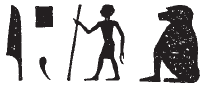 (note that the standing man sometimes writes ỉ < ỉȝw, “old man”). It is unclear if that is just a coincidence, or if these are really the same, mysterious phrase.↩︎
Here and below (col. 5), the Heh god is followed by a nb-basket, which Sauneron 1962, p. 221, n. e, rendered as ḥḥ-nb. Yet both spellings are most likely decomposed versions of the conventional Heh emblem, who usually kneels on a similar basket.↩︎

 - Sauneron 1962, p. 222, n. k, thought the bird wrote ḫn. But overlooked parallels indicate it represents the auxiliary verb pȝỉ, “to accomplish in the past”: see Urk. VIII, 142 (3); Esna II, 17, 41 (partially damaged).↩︎
This section details the first generations of Khnum as a primeval creator, similar to Theban theology concerning Amun. Kematef exists first, followed by the demiurge (Ptah-Tatenen-Irita), who emerges from Nun waters and creates the dry earth with the solar rays of his eyes. The determinative to Kematef here shows Khnum as a ram-headed crocodile.↩︎
This “mysterious image” is likely a ram-headed crocodile like Kematef.↩︎
 - The spelling of Khnum alludes to the current cosmogony. He is a crocodile emerging from the initial flood waters, similar to the divine crocodile depicted in Esna II, 112.↩︎
 - This pair of epithets occurs frequently elsewhere, so I follow the emendation of Sauneron 1962, p. 201, changing the first sign to bnr.↩︎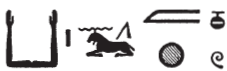
 - Sauneron 1962, p. 201, left the first group untranslated, but the ram determines the word kȝ, “bull”, multiple times, e.g. Esna 392, 19. The sexual nature of this epithet is clear from the following phrases.↩︎
 - Sauneron 1962, p. 202, translated this epithet as “Gardien du pays”, apparently reading the first word as mwnf (so also LGG III, 273a). Since that epithet is unique, I prefer to read the obelisk here as ḏ (< d < dḫn, “obelisk”), a uniliteral value that also occurs in the nearby hymn Esna 393, 23 (in ḏsr); cf. also Esna 388, 8 (in ‘Tatenen’). Not only is the phrase “ancestor of the earth” paralleled elsewhere (LGG VII, 623c), but this solution does not involve metathesis, and would better fit the procreative theme of the present text.↩︎
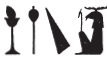 - It seems clear this should be a spelling of Khnum, but the sign values remain mysterious. The first sign, the potter’s wheel, writes n < nḥp in other spellings of Khnum and Esna. That may suggest the signs are out of order, so then the final sharp sign could write ẖ < ẖʿq, “to shave.” Alternatively, the first sign might be a mistake for the similarly shaped scimitar sign used at Esna, which elsewhere writes q < qn, “victory” (Sauneron 1982, p. 176, 315-317). Other spellings of Khnum employ a baboon in the first position (Sauneron 1982, p. 134, 101), apparently writing q < qnd, “rage”, or k < kyw, “ape”, and thus it is possible some trigrams actually write his name as qnb/qnm, corresponding to Greek vocalizations such as ‘Knoubis’. In that case, the sharp sign might be a tooth, which can be used to write b < bỉȝ.↩︎
 - Sauneron 1962, p. 203, only translated a portion of this verse: “par la force de qui …. sur leurs arbres”. Nonetheless, the initial verb appears to be nwd, “to move back and forth.” As in Esna 393, and later in this hymn, many words are spelled first acrophonically, and then in a standard, Ptolemaic spelling. Here the verb is written: n < nhm, “to rejoice”, and w < wnw.t. This spelling of šnw, “tree” or “plant” occurs throughout Esna. Finally, Sauneron translated the final word as “arbres”, but that makes less sense in context. Instead, this is most likely the similarly spelled word mn.wt, “roots”, for which compare KRI V, 93, 11, where Amun tells the king: “I shall cause them to see your Majesty like the sky, clouded and pregnant with a storm, so that their trees (mnw.w) spring up from their roots (mn.wt) because of it.” For Amun-Shu as a fierce wind, who disturbs trees, see also Klotz 2006, p. 61, n. B; similar hostile metaphors, in which the king attacks enemies “like the wind going through trees”, occur in Esna II, 8, 13; Esna 361, 9.↩︎
 - As with other words in this text, ʿȝ, “great”, is spelled first acrophonically, and then in a normal orthography. The first group is interesting: ʿ < ʿpy, “winged sundisk” (see the spelling of pr-ʿȝ in line 21), but then what does the solar bark represent? It could be an unique consonantal derivation ȝ < wỉȝ (the first two consonants are weak), but this almost always write w. In that case, ʿȝ would here be spelled ʿw, similar to the infinitive form of ʿȝ, “to be great” in Demotic.↩︎
 - As Sauneron 1959, p. 48 already noted, multiple words in this hymn are spelled first acrophonically, and then again in standard Ptolemaic orthographies. Here sḫm is derived s < sỉȝ, ḫ < ḫpš, and m < mnš, “cartouche”; ḏsr comes from ḏ < d < dḫn, “obelisk”, s < Sobek, r < rḫy.t.↩︎
 - Sauneron 1959, p. 48, did not explain this spelling, but several of the phonetic values are tabulated without citations in Sauneron 1982, pp. 192-194. The signs appear to be derived as follows: ṯpḥ(.t) = ṯ < dwȝ.t, p < p.t, ḥ < ḥfȝ or ḥrr.t, “snake”; ḏȝ.t < ḏʿ.t(see the ‘Klartext’ spelling here) = ḏ < tȝ, ʿ < ʿ.wy < wp (two arms < two horns).↩︎
For the reading of this epithet, compare Esna 254, 16; Esna 300, 5; cf. LGG IV, 394b.↩︎
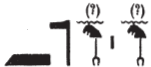 - Based on similar spellings at Esna featuring three ram-headed staffs for 30 (10 = mḏ < mdw), Leitz, Löffler 2019, p. 108, n. d, tentatively suggested a connection to the 30 Creator gods, even though one of the standards is missing here. As in a similar text from Armant, they are specifically listed in the following text: 7 Khnums + 7 Djaisu + 8 members of the Ogdoad + 8 Djebau = 30 primeval divinities.↩︎
 - Rather than ṯz-nṯr.w, “der die Götter knüpft” (Leitz, Löffler 2019, p. 106), this most likely a spelling of ḏȝỉs.w, etymologically related to ṯz.w, “utterances”: LGG VII, 499b and 592b. This group of gods fits nicely between the 7 Khnums and the Ogdoad.↩︎
As Leitz, Löffler 2019, pp. 108-109, n. g, it seems very unusual that this text concerning creation on the potter’s wheel makes so many references to boats. Yet these nautical metaphors refer, as often in Egyptian texts, to the course of a person’s lifetime. To travel on the “path” or “water” of a god is to act piously. More important is the key phrase, repeated at least twice:
 and
and  . These appear to be variants of the idiomatic expression m (s)wȝḏ-mnỉ, literally “to disembark and to moor”, a figurative expression meaning “throughout an entire lifetime; in perpetuity”: Collombert 1998 (to which these examples could be added).↩︎
 - Emending the plant to the similar šȝ-sign, and nb to =k.↩︎
Leitz, Löffler 2019, pp. 107, 109, n. l, translated these phrases quite differently, appealing to a similar text in Esna 254, 6. However, I read that text differently as well, and it is much more likely that the king was “distinguished in the womb” (a very common epithet), and that the wedjat-eye here writes the verb ỉrỉ, and not the toponym “Egypt” (Bȝq.t), for which one would expect a determinative.↩︎
This unexpected spelling of the verb kȝ, “to plan; say” is confirmed via two parallels in Esna II, 58, 3; Esna VI, 474.↩︎
Contra Leitz, Löffler 2019, p. 110, n. n, the mysterious ḏ-serpent who emerges with the primeval uraeus-Menhyt is most likely Irita, not their father, Kematef. See Klotz 2012a, pp. 123, 171-173.↩︎
This scene belongs to the Festival of Seizing the ʿwn.t-staff, celebrated on Epiphi 19-20: see Esna 196 and following texts.↩︎
Note the spellings:
 . The feather writing ʿ, “arm”, is attested elsewhere: Kurth 2007, p. 269. For the first sign, Kurth did not register the phonetic value m-ʿ, “from” < mỉ, but see already Sauneron, Ménassa 1969, p. 9, n. b; and add Esna 249, 6 (27) and Esna 366, 5 (19).↩︎
 - See Wb. IV, 157, 12-17. The plant sign is a mistake for the expected brazier determinative.↩︎
 - Reading highly speculative. LGG VII, 693c, offers no suggestions for this group.↩︎
Restoring a common epithet of the bellicose Khnum. Many of these epithets occur in the scene of slaying enemies on the north exterior wall: Esna VII, 619.↩︎
Similar epithets in Esna VII, 619, 26-27; see also Esna 225, 28 (88).↩︎
 - Some of the signs appear to be in the wrong order, and Leitz, Löffler 2019, p. 110, n. q, noted the presence of additional hieroglyphs for the epithet ỉwn wr. The standing man could be an ideogram for nb, “lord”, after which the scarab could write tȝ, and the throne (s.t) + water (n.t) signs represent tȝ-sn.t, “Esna.”↩︎